Relay
An AI assistant that collects supplier sustainability data through the inbox suppliers already use
Challenge
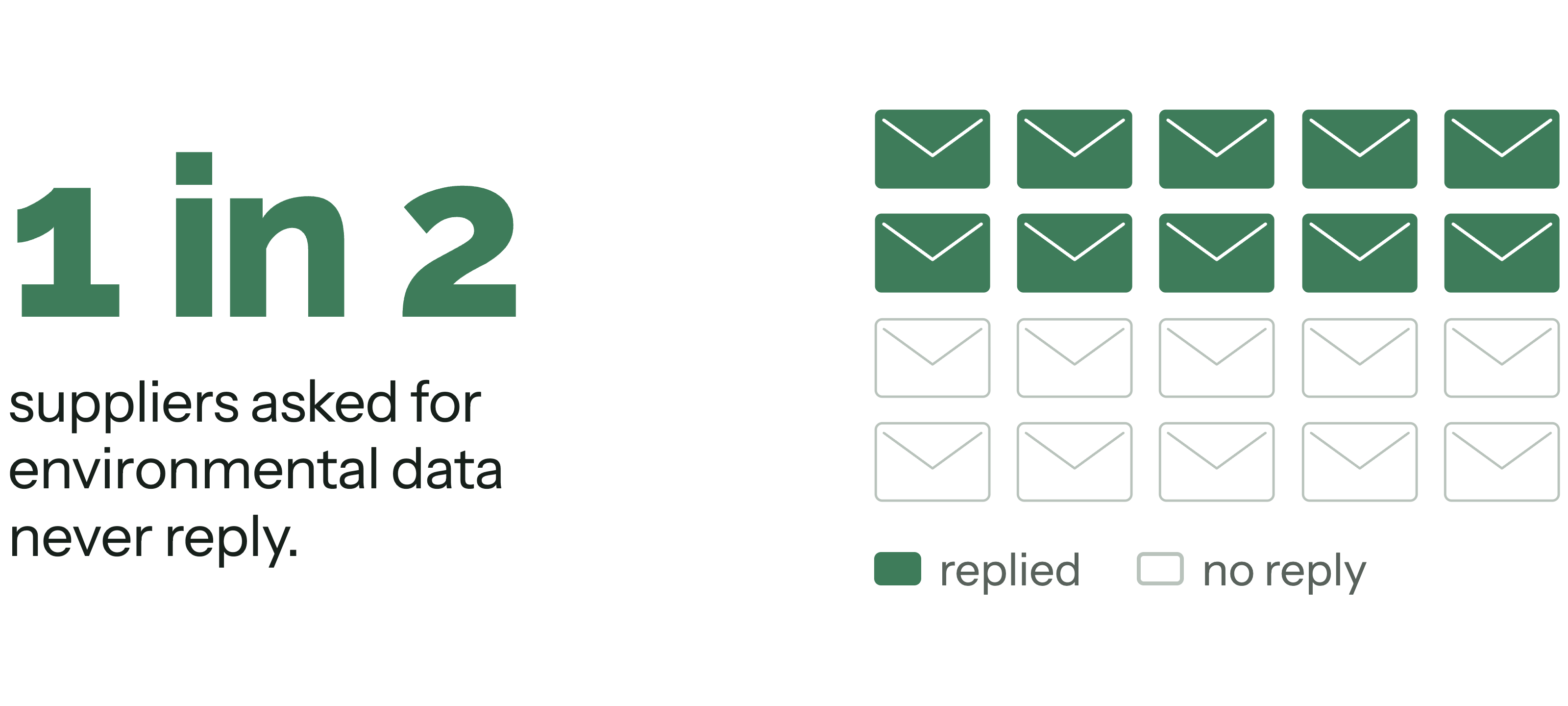
Manufacturers need sustainability data from their suppliers. Getting complete, comparable answers takes weeks of follow-up, and about half of suppliers never reply.
Approach
We began by gathering field knowledge from manufacturing companies about how they collect supplier data. From the answers, I led the desk and market research and built the concept into a working prototype.
Outcome
An interactive demo of the full loop, from request to verified score. The company gave positive feedback on the concept.
Asking is easy. Getting answers is hard.
Procurement teams increasingly need sustainability data from every supplier. Collecting it means weeks of requests, reminders and follow-ups, and much of the effort lands on the supplier.
Different formats
Free text, spreadsheets, PDFs, certificates, in any language.
Incomplete answers
Gaps someone has to spot, chase and check by hand.
No response
Small suppliers often lack the time, know-how or a clear reason to respond.
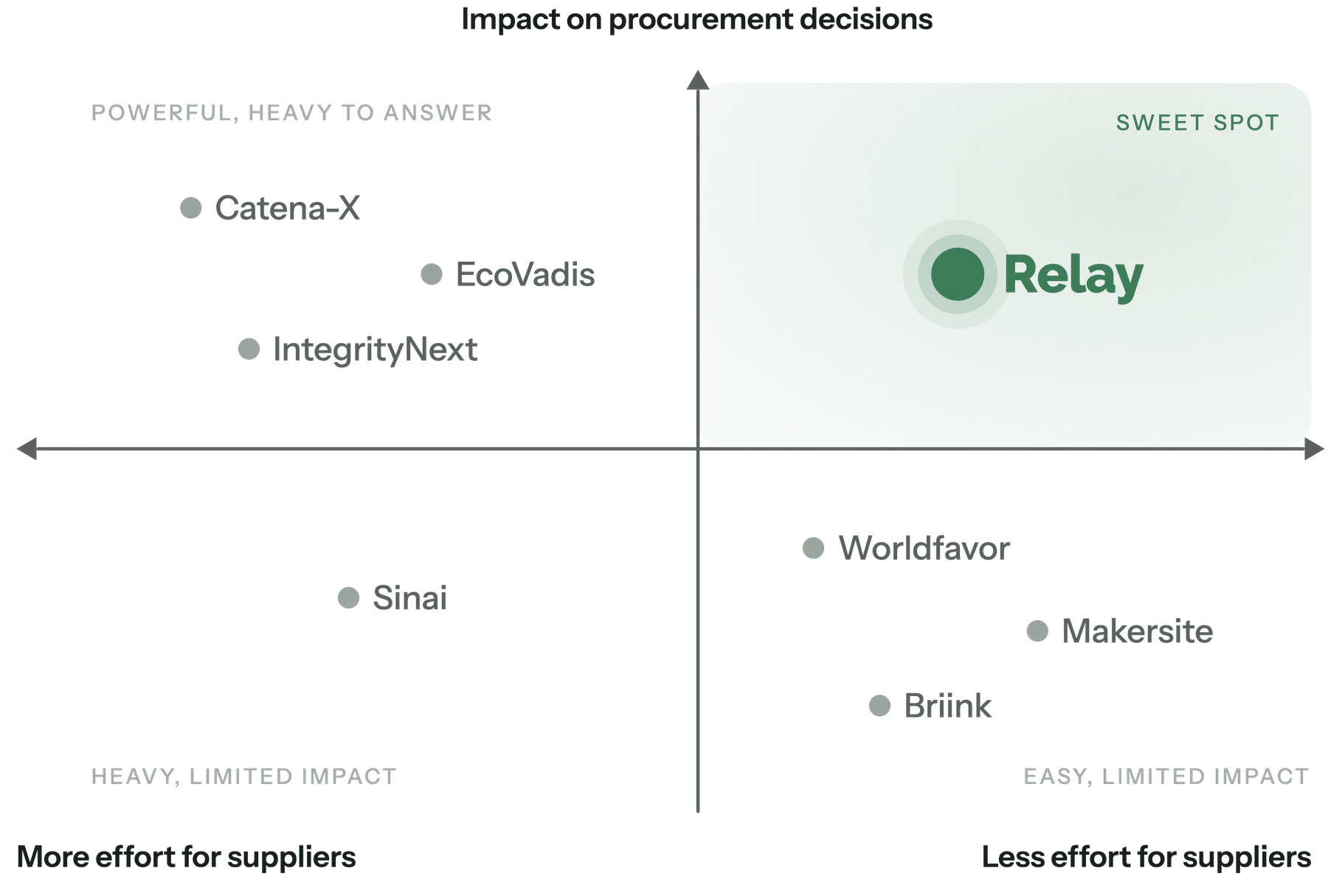
Most tools assess suppliers. Few make answering easy.
I mapped the tools in this space by two things: how much they shape procurement decisions, and how much effort they ask of suppliers.
The problem is the effort of answering
Suppliers are short of time and know-how, not tools. How might we make answering effortless for suppliers, and the answers usable for procurement teams?
For suppliers
01 · Less effort
Ask only what is relevant.
02 · Fits every supplier
Whatever their size or know-how.
For procurement teams
03 · Less manual work
No chasing, cleaning or re-typing.
04 · Useful, even if incomplete
See what is missing, estimated or verified.
Relay
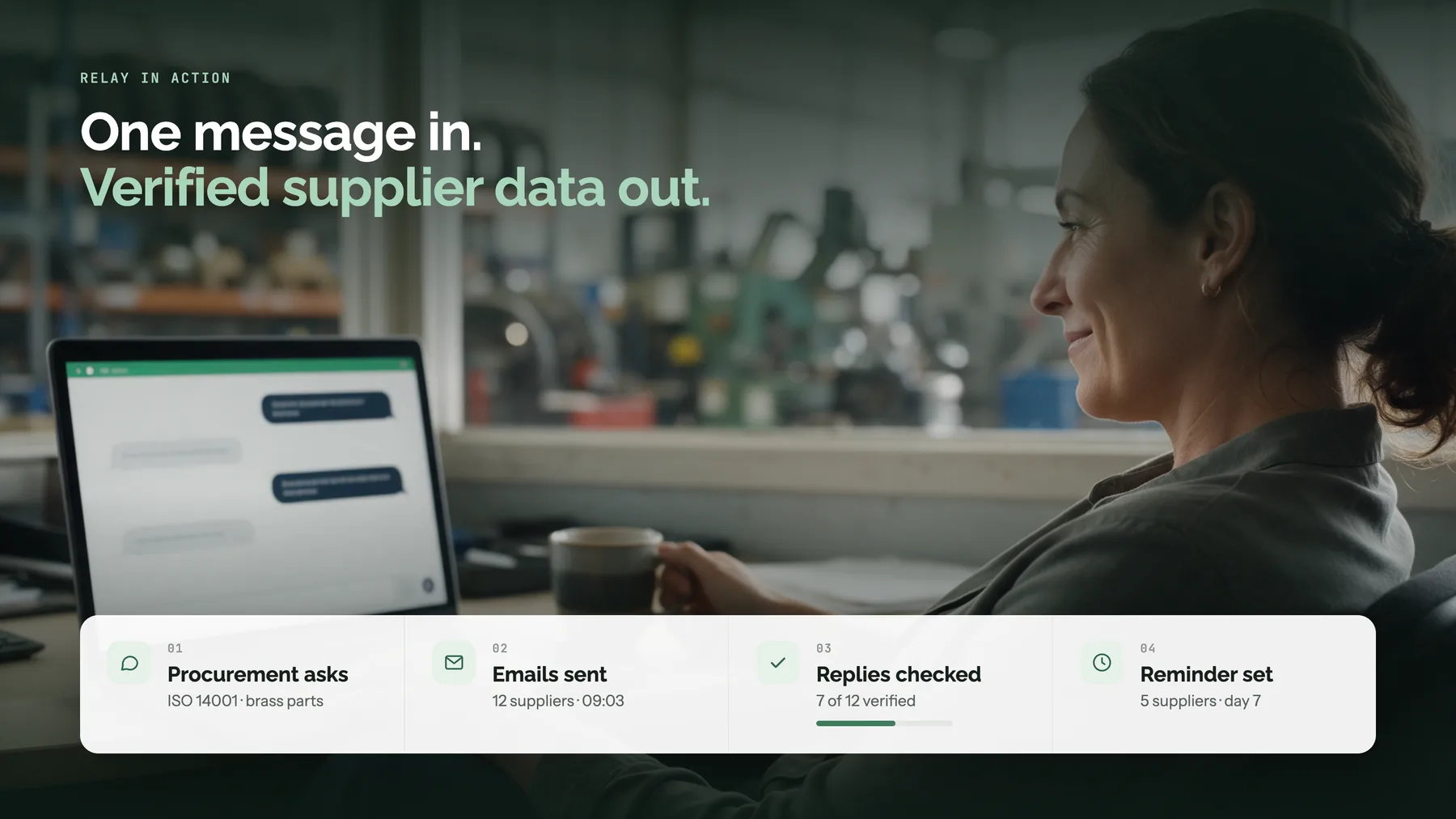
An AI assistant for procurement teams. They ask in one chat message, suppliers simply reply to a short email. Relay reads, checks, chases and scores.
Designing the conversation
Relay talks like a helpful colleague: short, result first, next step offered.
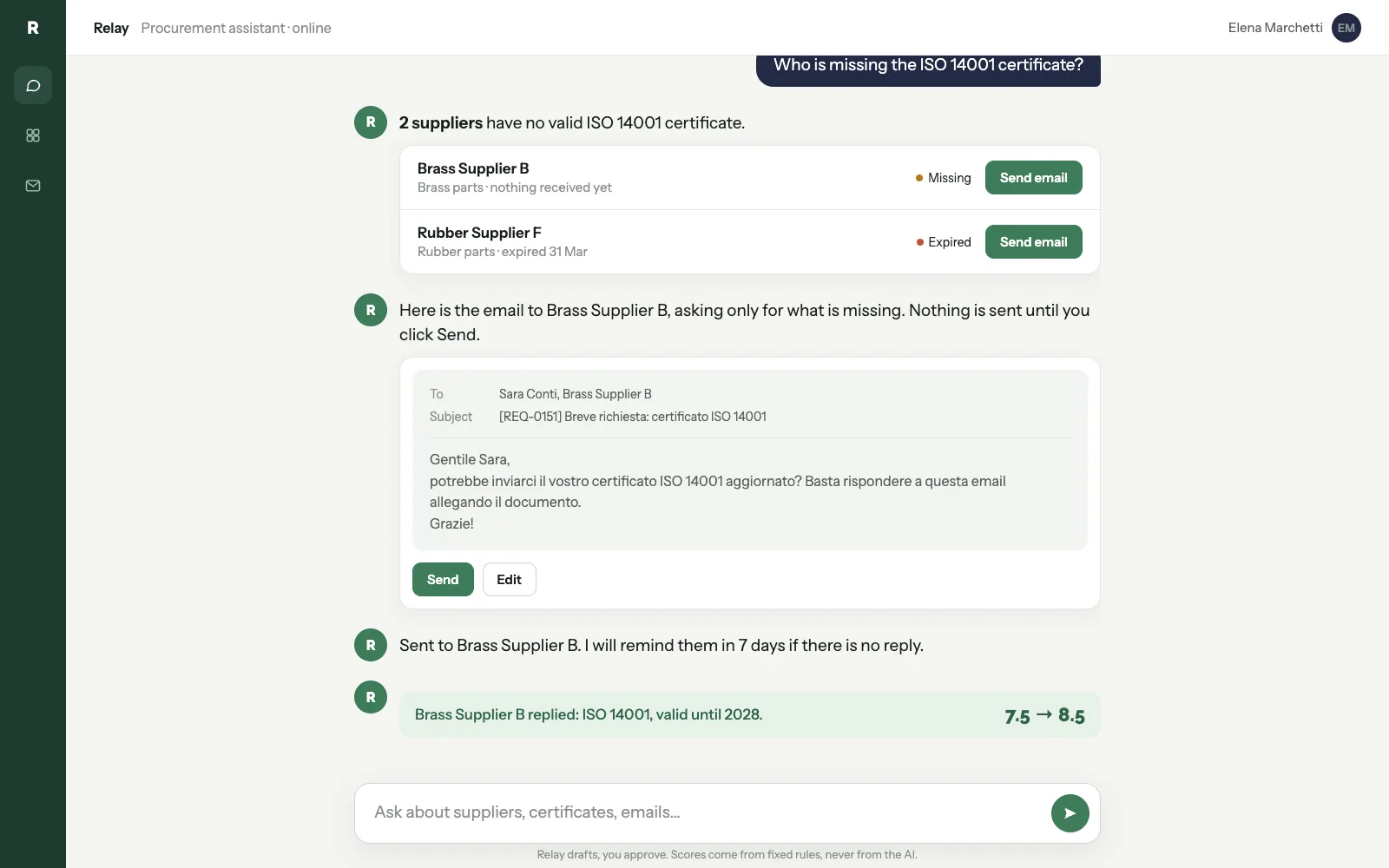
Answer, then offer
Every reply ends with one clear action.
Ask only what is missing
Short emails, in the supplier’s language.
Nothing without a yes
Every email waits for a click on Send.
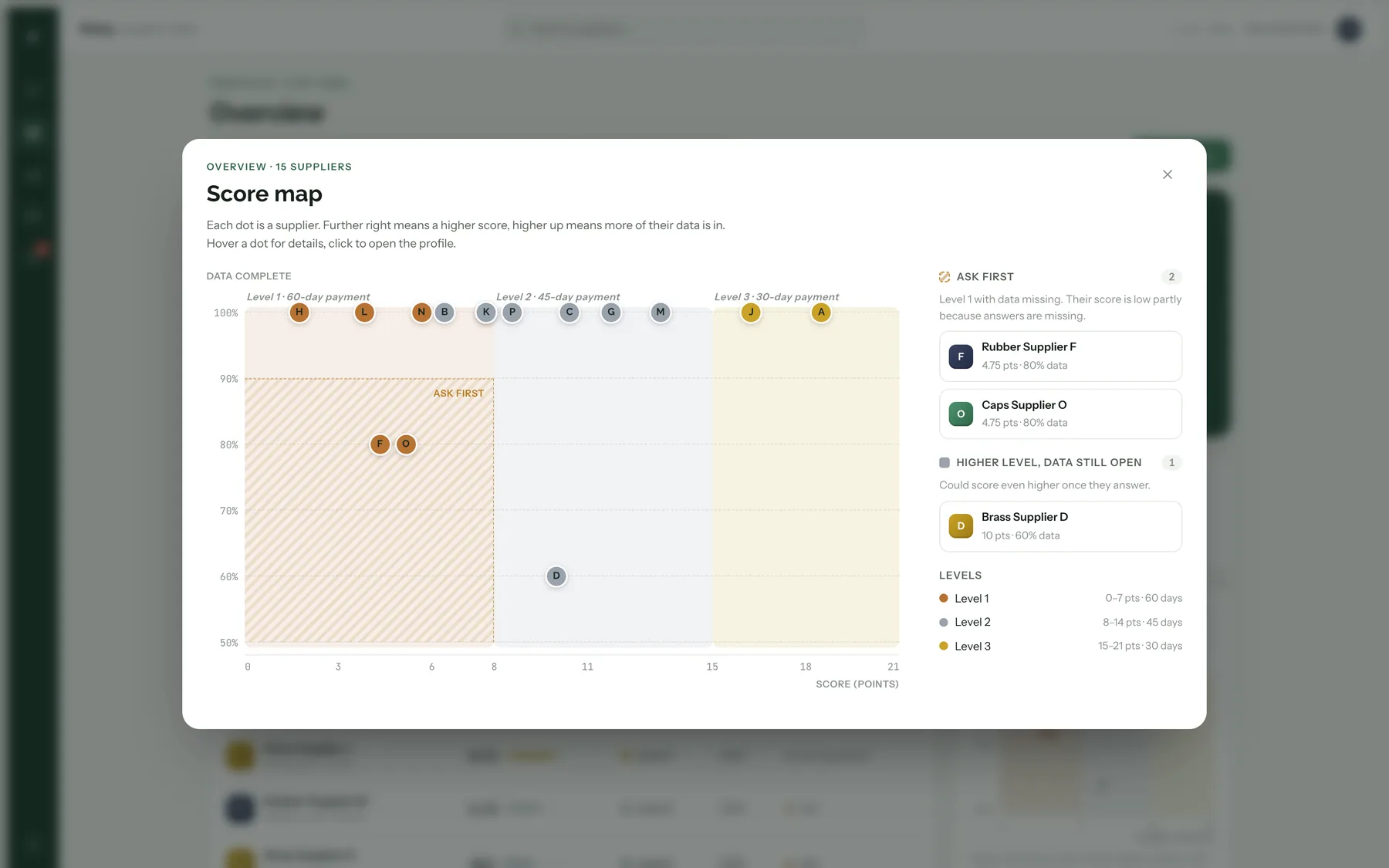
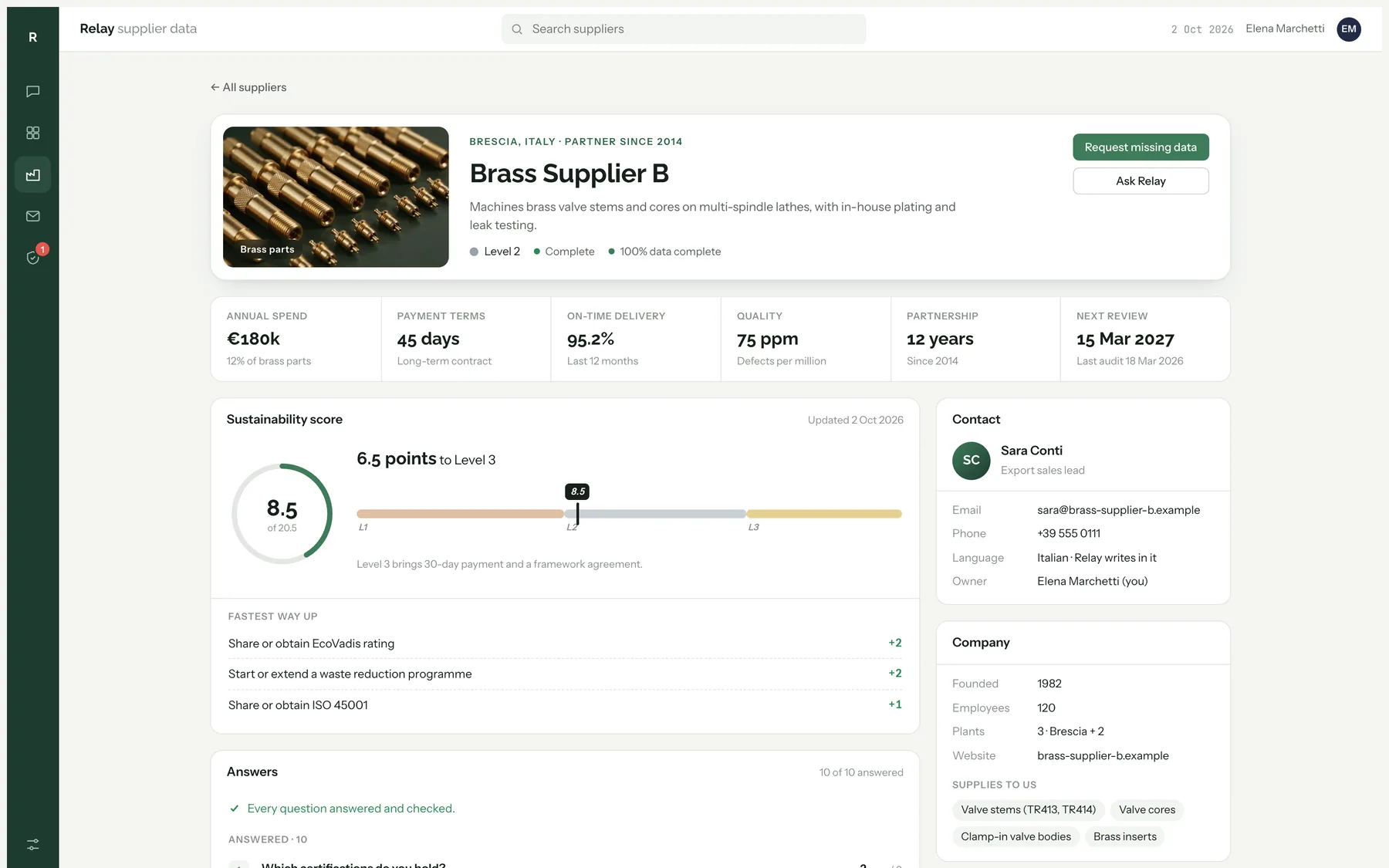
Every supplier at a glance
Separate scores for data quality, responsiveness and environment. Higher levels bring better terms, so suppliers have a reason to answer.
AI drafts, people decide
Procurement decisions affect contracts and payment terms, so every part of Relay was designed to be checkable.
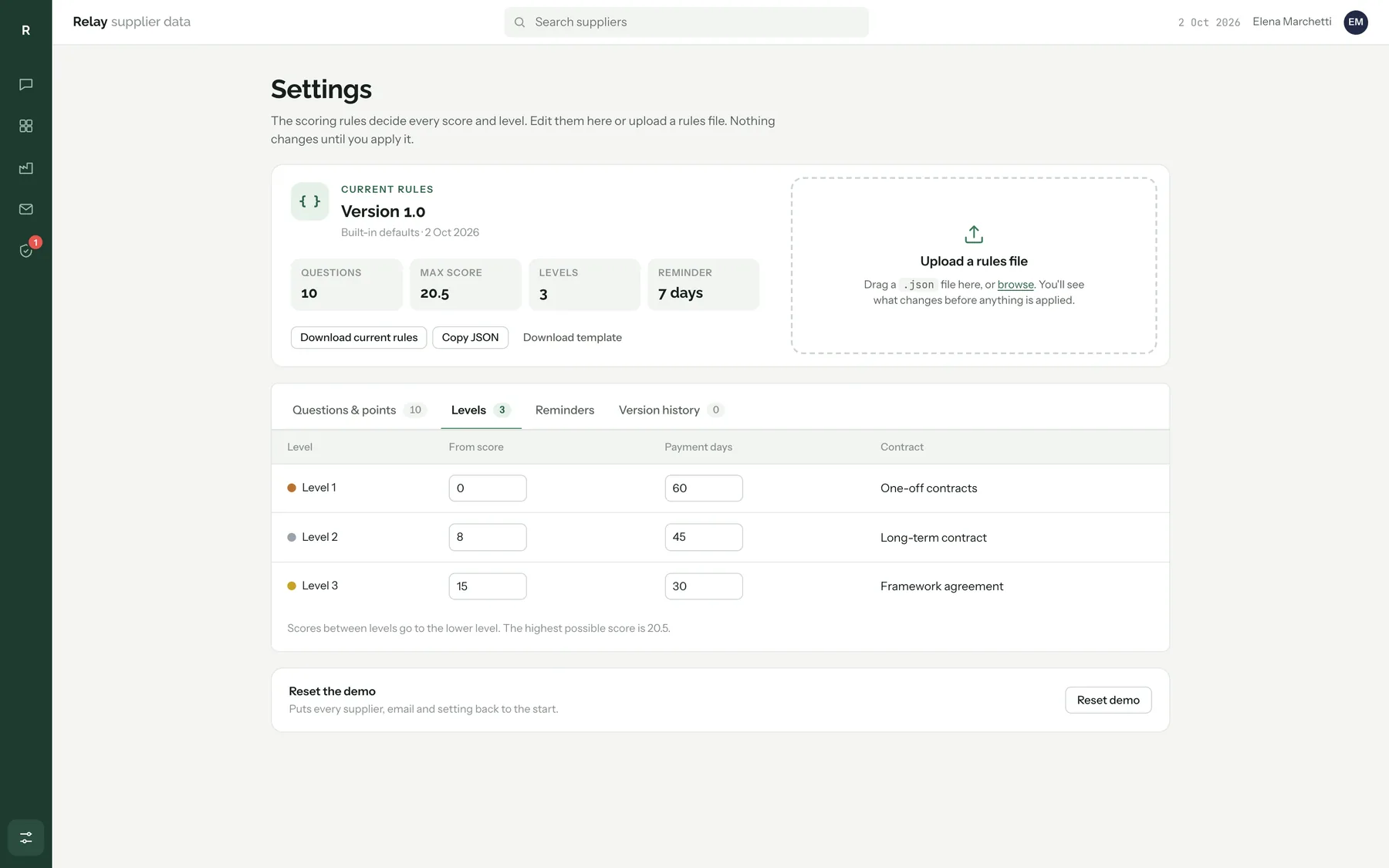
Fixed rules
Scores come from transparent rules, never from the AI.
Traceable
Every value links back to the document it came from. Uncertain values go to a person first.
Private by default
Supplier data stays in the EU and is never used to train AI.
Value for everyone in the chain
We presented Relay with an interactive demo. The company’s feedback was positive.
Suppliers
Answer from their inbox, and earn better terms.
Procurement teams
No chasing. Reminders and checks run on their own.
Sustainability teams
Comparable data, every value linked to its source.
Their customers
Up-to-date data on who makes each part.
From one company to a start-up
The signs are good: every company needs data from its suppliers, the market is growing fast, and there are plenty of first customers to start with.
Why it matters: supply chain emissions are 26× a company’s own, so every company needs data from its suppliers
Growth: the supply chain sustainability software market, from $1.7B to $7.7B by 2029
Who: mid-sized EU manufacturers, a first market big enough to build on
Potential: yearly revenue if 1–5% of them pay €500 a month
Sources: CDP and BCG, Scope 3 Upstream (2024); Verdantix, supply chain sustainability software 2023–2029; EU value-chain cap (Omnibus I); Eurostat structural business statistics (EU manufacturing enterprises by size, 2015). The revenue estimate is my own.
Looking for more detail on this project, or have a similar challenge in mind?