Voice AI Agent for Proptech
Picks up on the seller’s hesitation and sentiment, then hands that insight to the human agent

Challenge
Casavo asked for a voice front desk that could speak with a homeowner, understand the property, give a valuation and book a visit. The harder problem was that real conversations arrive in the wrong order, and three very different sellers can look identical once their answers are in a database.
Approach
I designed and built both sides of the service in a day: a voice agent that reconstructs the sale project behind the conversation, and an Agent Console that hands the human agent a dossier with evidence, readiness and conversational signal.
Outcome
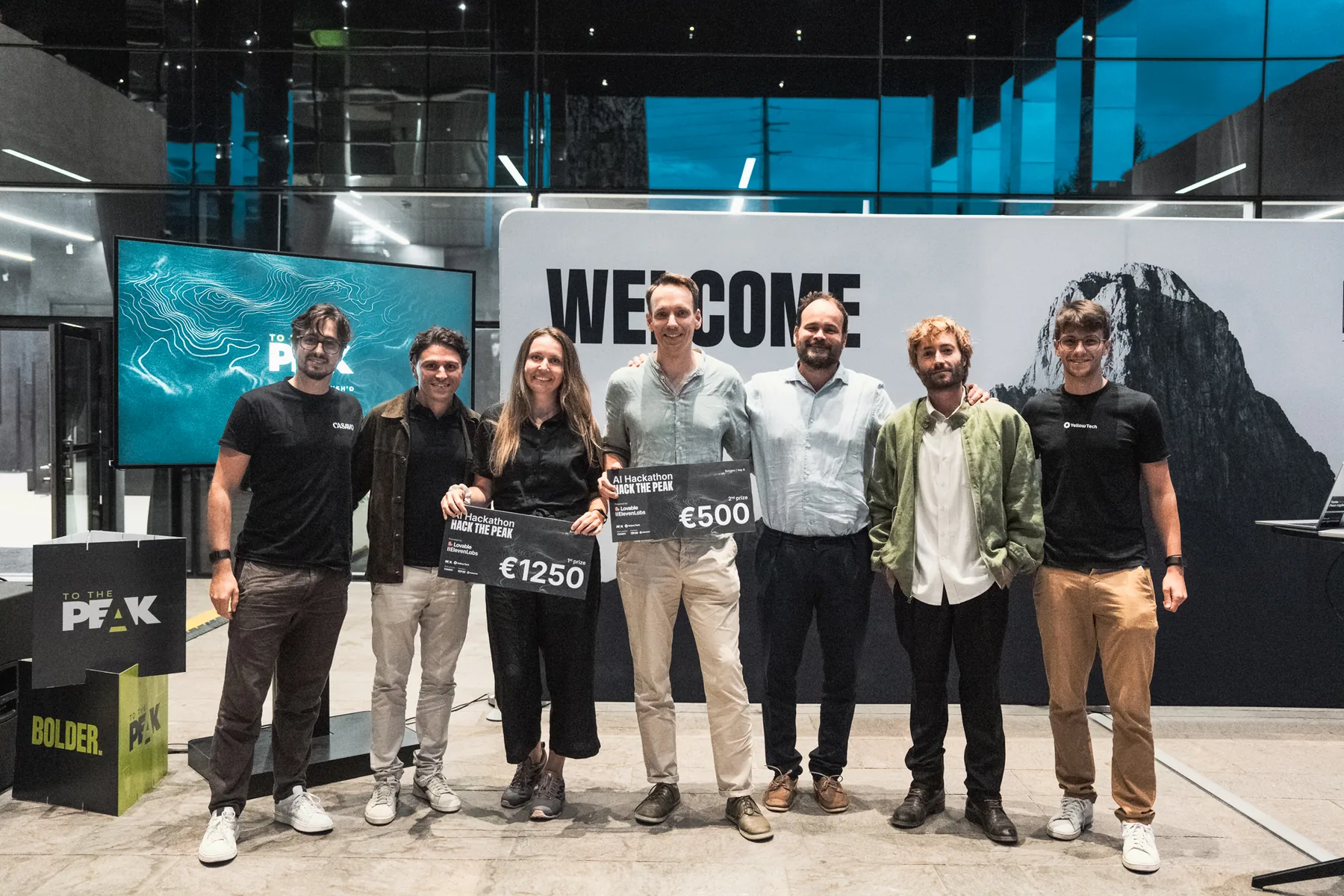
Delivered a working end-to-end prototype on the real challenge APIs, with live valuation and booking. The project won 1st Prize at Hack The Peak 2026.
A front desk that does more than collect answers
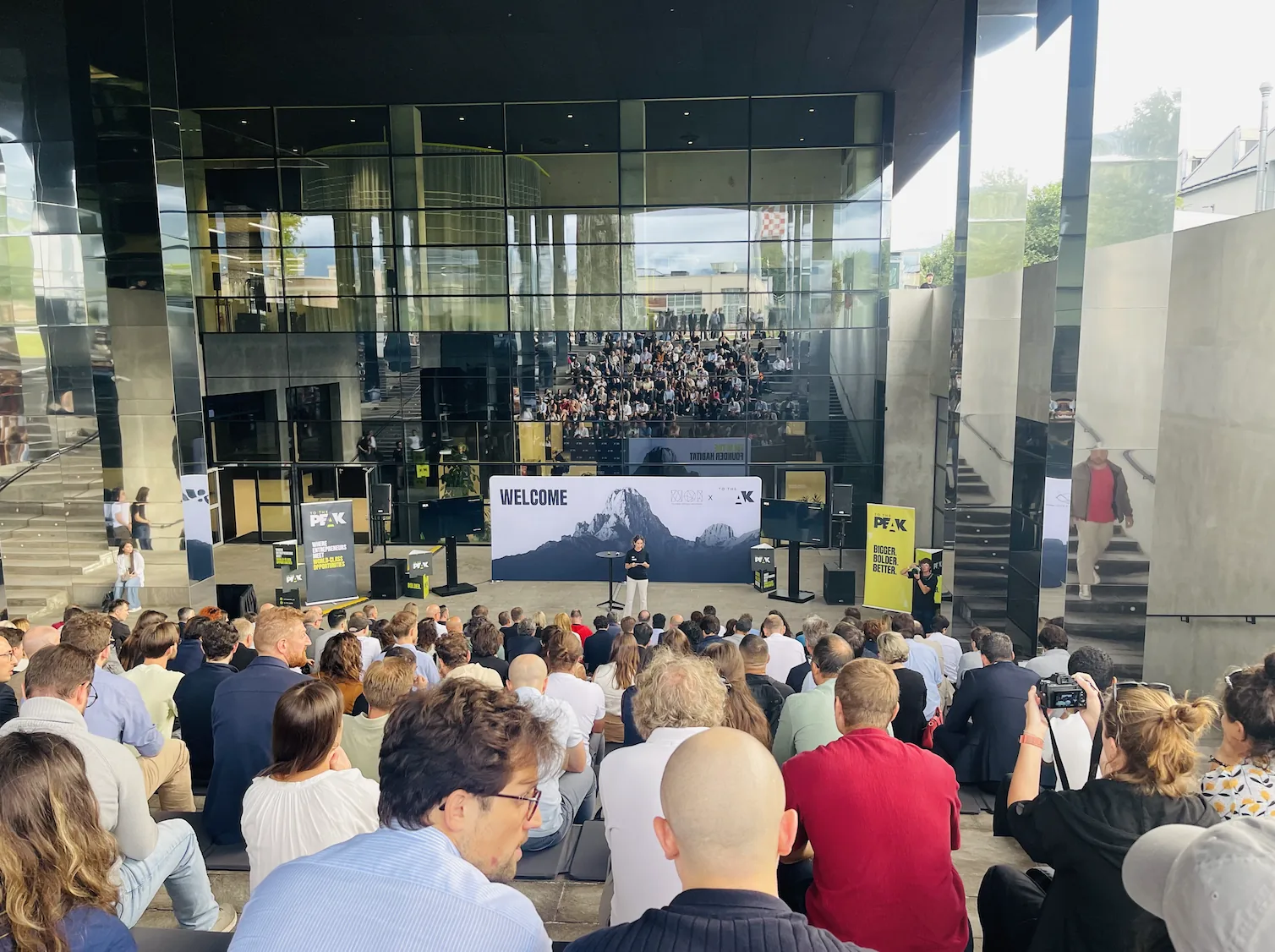
As part of To The Peak 2026 in Bolzano, I joined Hack The Peak, an AI hackathon organised by Yellow Tech, with Casavo as main partner and Fercam and Soource as partners.
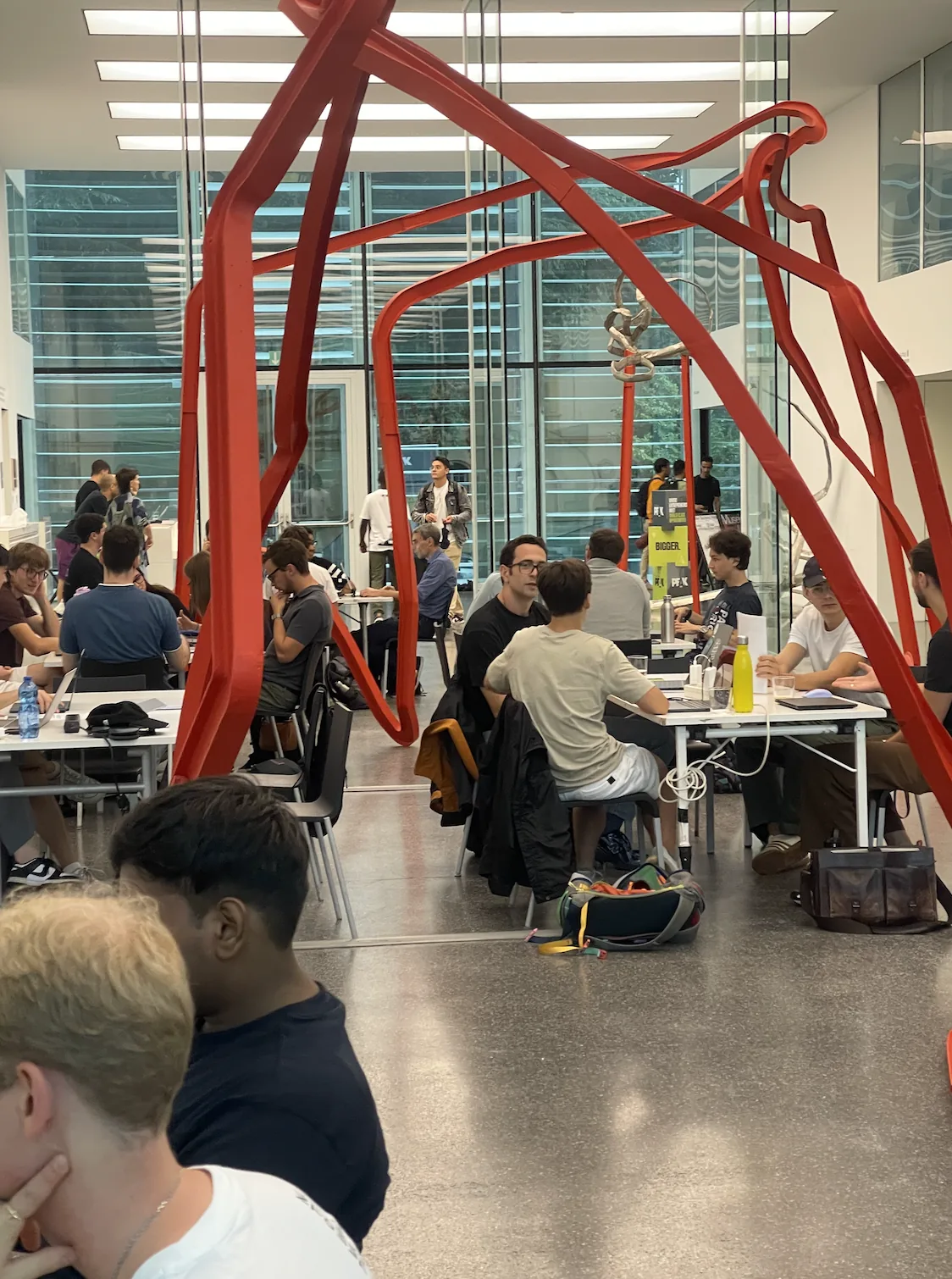
Casavo challenged participants to design a voice front desk for homeowners considering selling their property. The task went beyond building a voice bot: the system had to understand the property, assess seller readiness, generate a valuation, book the right agent when appropriate, and turn the conversation into something useful for the human team afterwards.
A good front desk should not simply collect information. It should understand what kind of situation the person is actually in, decide what should happen next, and prepare the human agent who will take over afterwards.
From a voice bot to a service
On one side is the homeowner. They interact with a conversational voice agent that helps them understand their property value and what the next step could be.
On the other side is the Casavo real-estate agent. They receive a structured dossier containing the information gathered during the call, the valuation, the seller’s readiness, the appointment, and contextual insight from the conversation.
The AI therefore acts as a bridge between the two: homeowner, AI conversation, Casavo services, human agent.

Designing the conversation
It starts with the property: address, city, surface, floor, condition, ownership. Asked only where the answer is missing, so it never becomes a voice version of a web form.
Then the seller. Why now? How soon? Anyone else on the deed? Another agency already involved? Anything in the way?
The picture fills in as it goes, and the agent can tell exploring from ready to appoint.
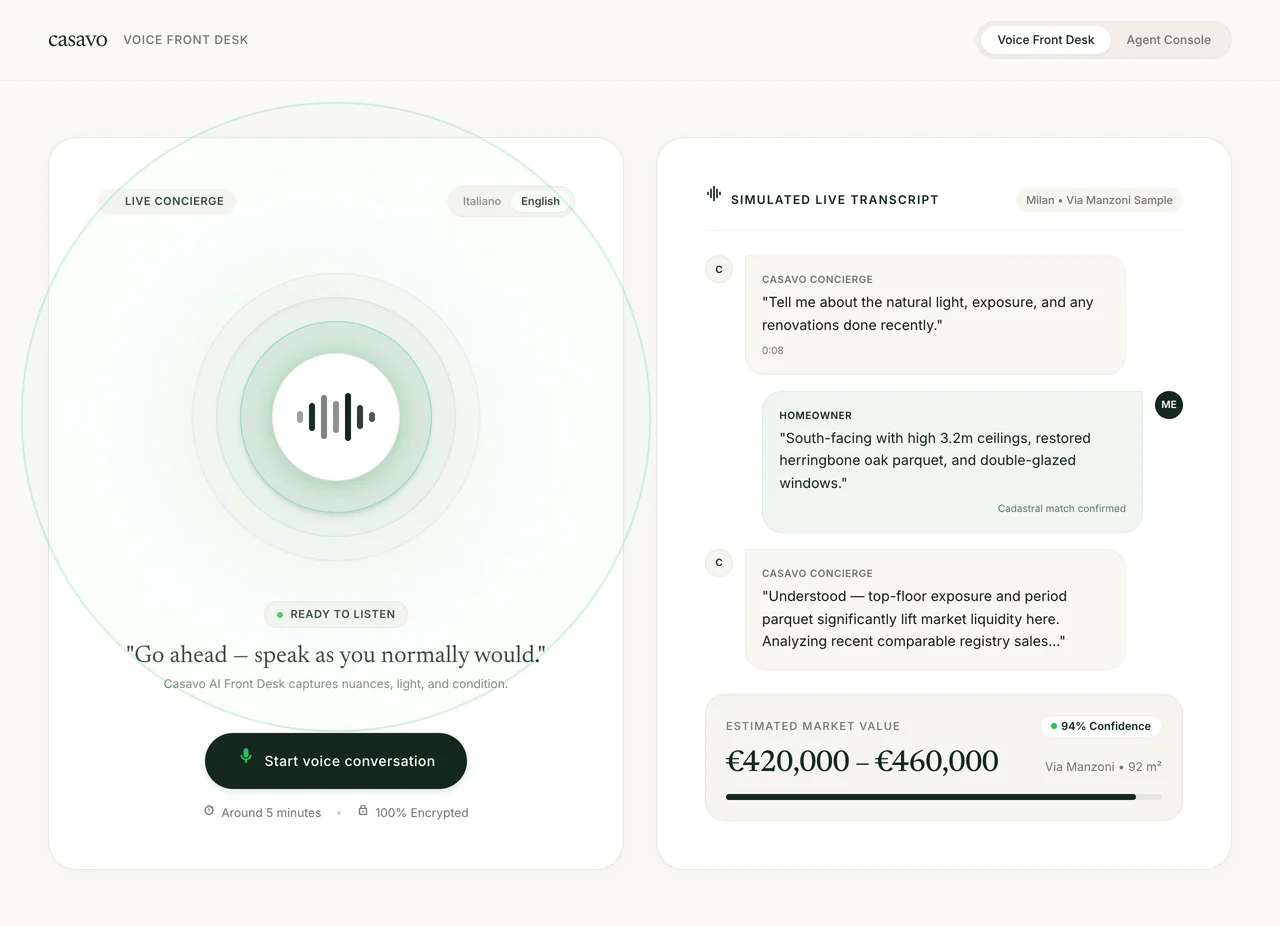
Three layers, one service
The prototype combined ElevenLabs, Lovable and Casavo’s challenge APIs.

The conversational layer. The agent could conduct the conversation in Italian or English, gather information naturally, call external tools during the conversation, and generate a transcript after the call. I also used the conversational output and sentiment information to create an additional layer of insight for the Casavo agent.

The operational layer: property information, valuation, agent lookup, available appointment slots, and appointment creation. That meant the AI was not simply saying “I can arrange a visit”. It actually had to find the correct agent, retrieve an available slot, and create the appointment successfully.

The product and integration layer: the seller-facing interface, the Agent Console, the lead database, server-side integrations, and the connection between the voice agent and Casavo’s APIs.

What was technically difficult
The most challenging part was not creating an interface. It was making several independent systems behave like one coherent service.
Conversation → reliable data
Problem
Voice is unpredictable: users interrupt, give several details at once, or end calls early.
Solution
I used progressive saving, continuously updating one lead dossier as new information, valuation and booking data became available.
API latency → natural conversation
Problem
Valuation and booking API calls created pauses that made the voice experience feel broken.
Solution
I added short conversational bridges before tool calls, then kept the technical operation silent until the result returned.
Flexible dialogue → reliable actions
Problem
Dialogue in Italian or English had to feel natural; booking needed exact data in order.
Solution
I separated dialogue from system rules: the agent asked freely, but valuation and booking ran only on complete data.
From transcript to human insight
Once the conversation ends, the customer journey becomes an employee experience.
I designed the Agent Console to turn each call into a concise operational dossier. Instead of starting from a long transcript, the agent immediately sees the seller, property, readiness, valuation, appointment, blockers and recommended next action.
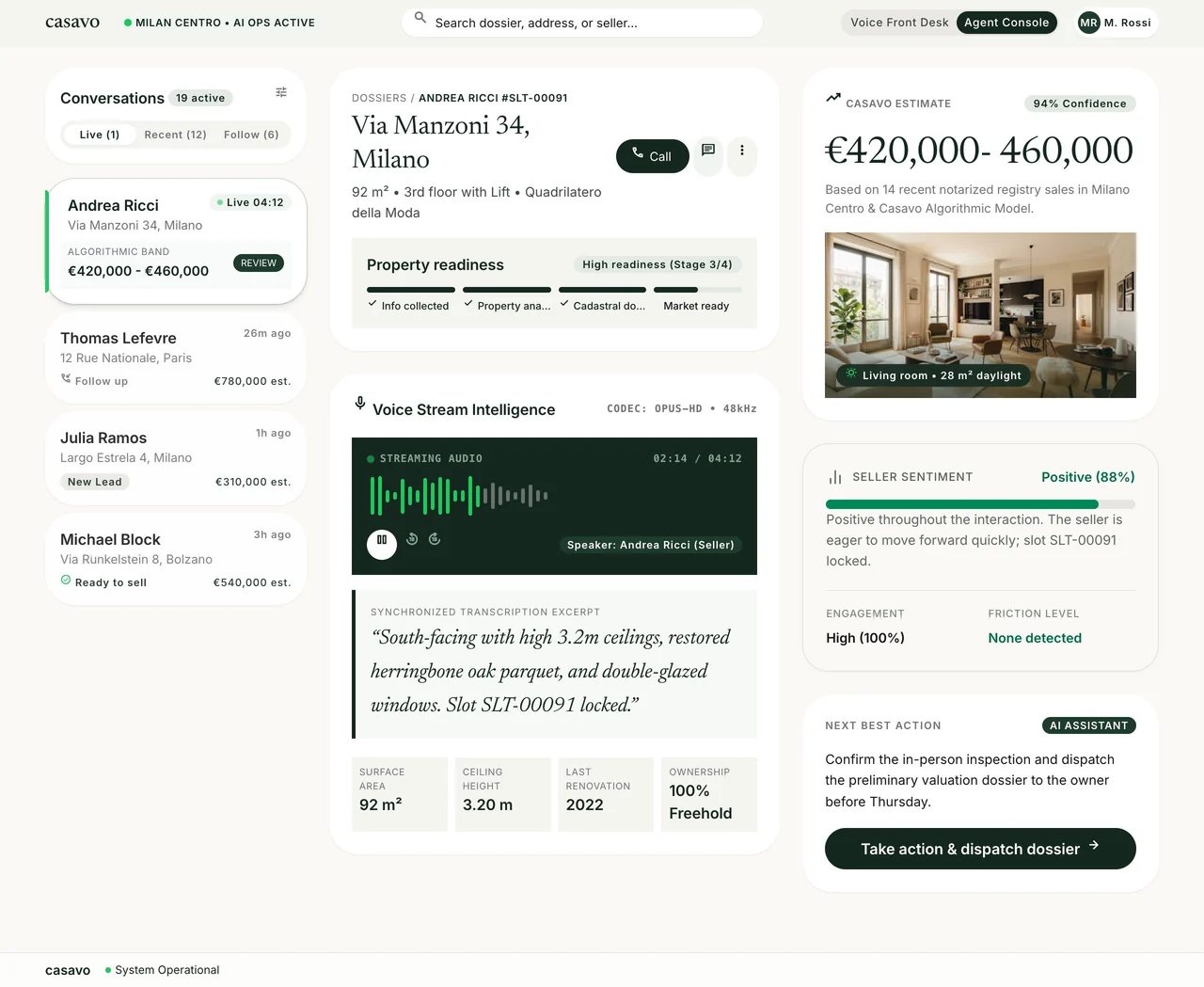
Reading the conversation behind the lead
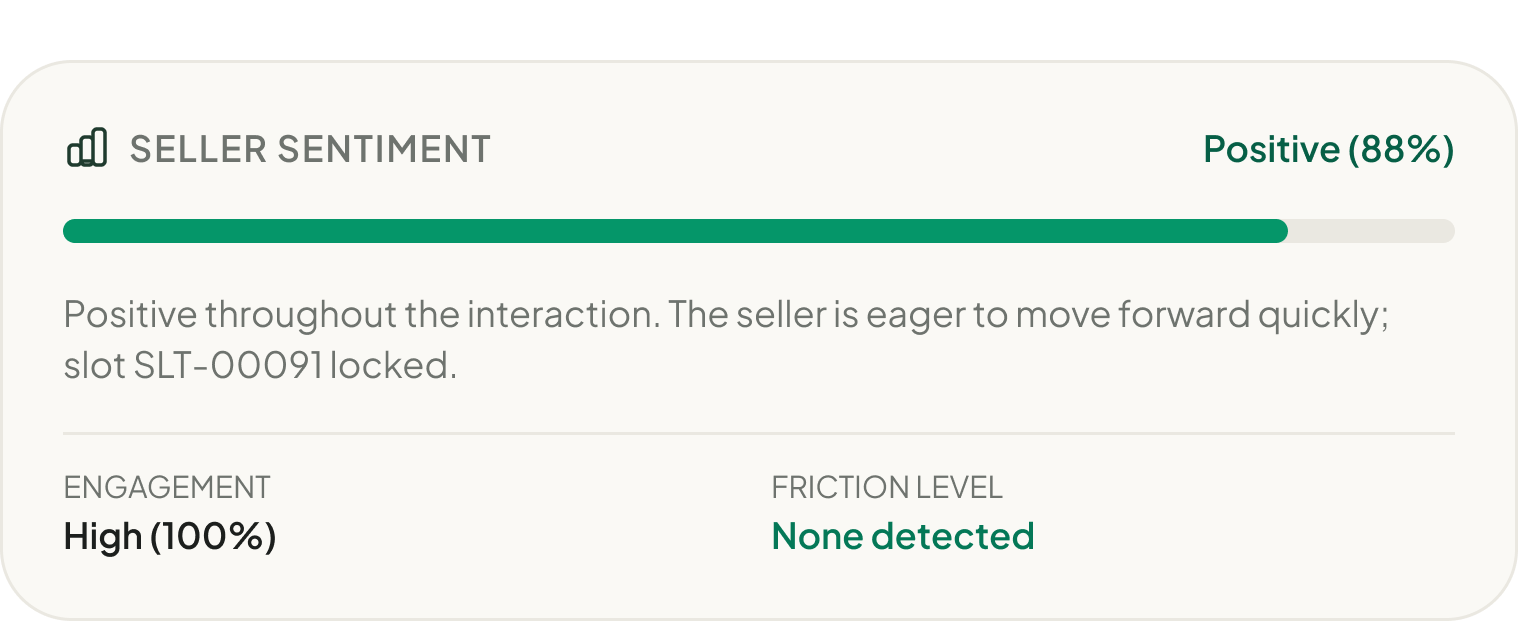
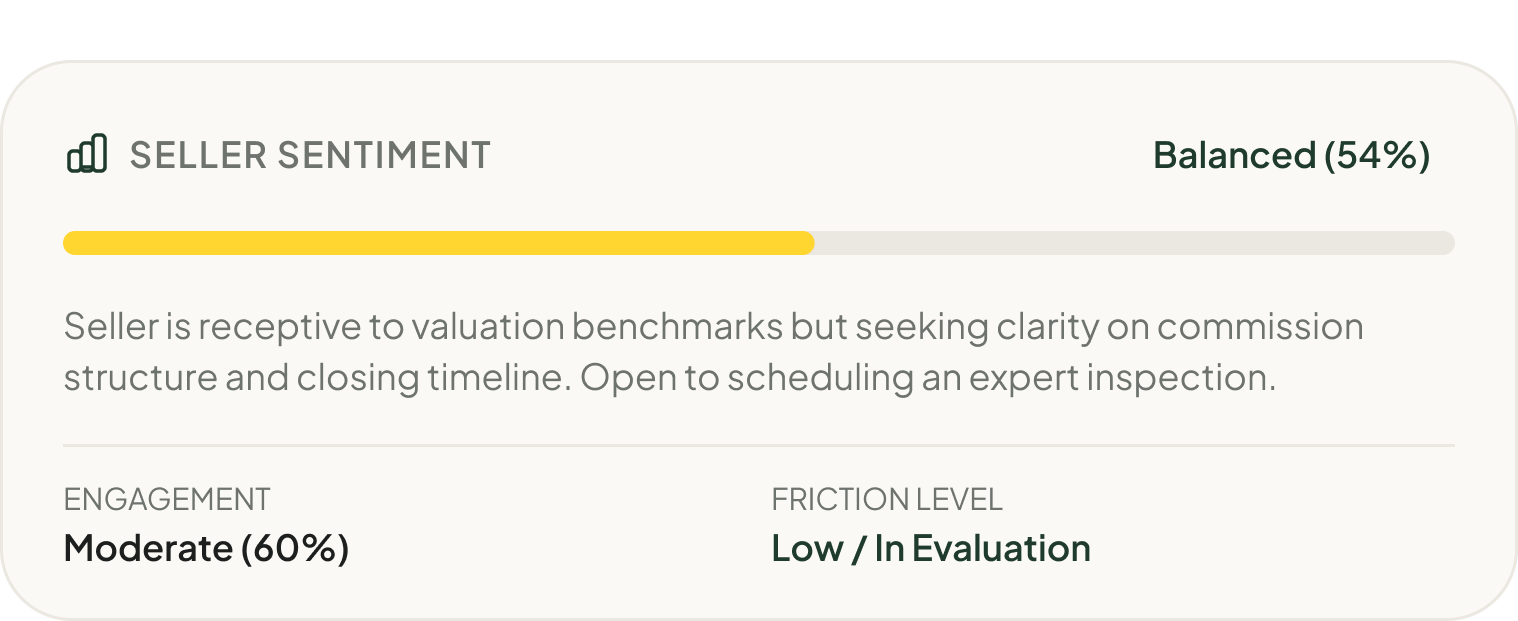
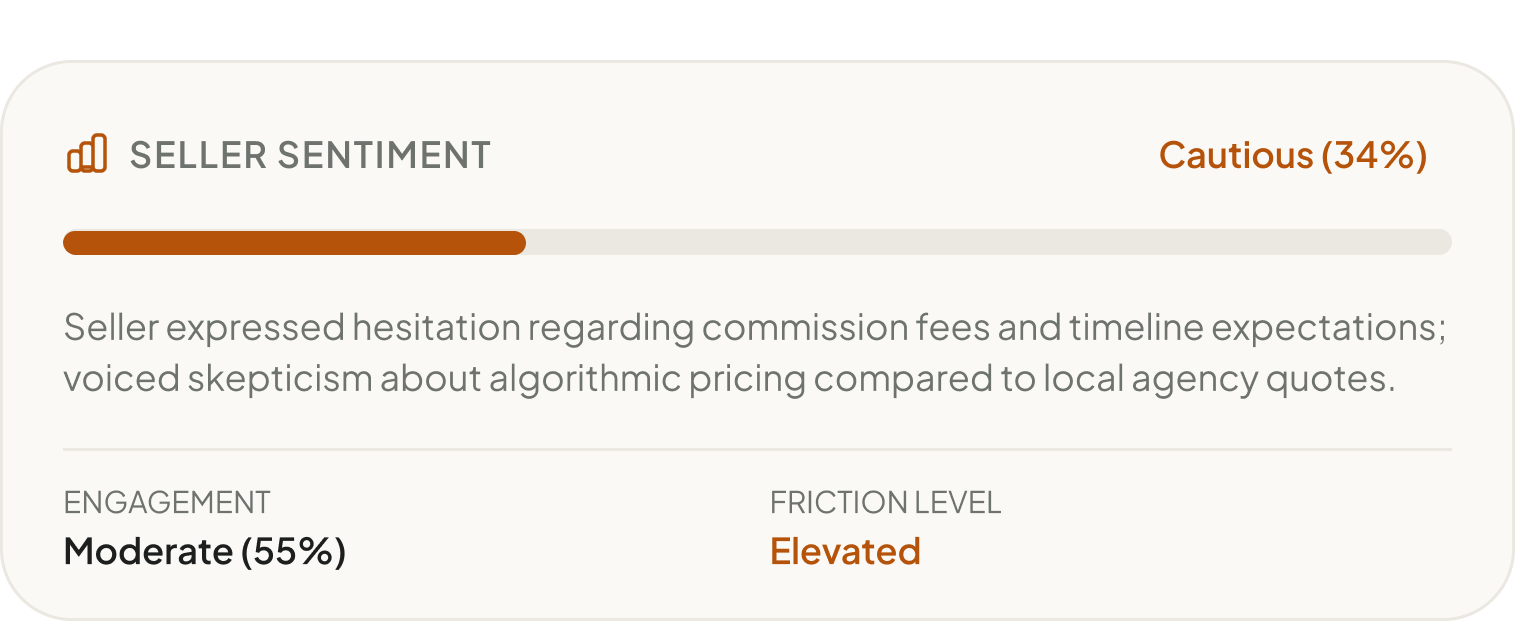
Alongside the factual dossier, Seller Pulse captures the human side of the conversation: sentiment, engagement, friction and decision confidence.
It shows how the seller’s attitude evolves during the call and highlights what may still be creating hesitation, helping the Casavo agent adapt the follow-up.
The signals stay connected to transcript evidence, so the AI insight remains transparent and inspectable.
Built in a day, in Bolzano
Beyond automation
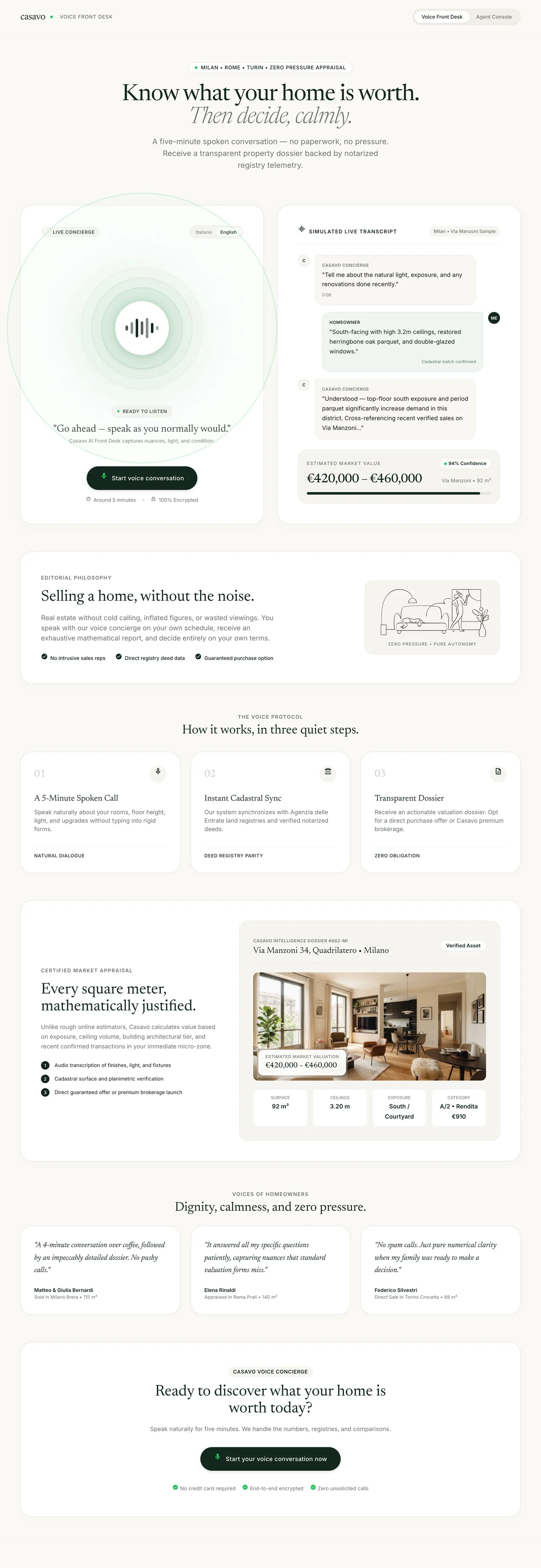
By the end of the hackathon, the seller-facing experience had become a single, coherent journey rather than a set of disconnected functions.
The homeowner could start with a conversation, share the details of the property naturally, receive a valuation, and understand the next step without switching between forms and tools.
This screen became the final expression of the concept: the technical complexity stayed in the background, while the experience remained simple and understandable for the person using it.
Why design made the difference
What resonated most strongly with the jury was the role of design in the solution. The technical requirements could already produce a functioning voice workflow: collect data, generate a valuation, and book an appointment.
But Seller Pulse extended the value of the conversation beyond automation. The agent could understand the emotional tone and conversational signals of the seller and translate them into useful context for the human real-estate agent. That created something closer to a genuine service handover.
The outcome
The final prototype connected the complete service loop: the homeowner talks, the AI understands, Casavo services act, the human agent receives the context, and the next conversation starts better prepared.
For me, that became the most valuable lesson from the project. The interesting opportunity in AI is not always replacing a human task. Sometimes it is designing the transition between machine intelligence and human judgement so that both sides work better together.
Looking for more detail on this project, or have a similar challenge in mind?